Self-Reflection at the Chapel of Bones Évora
The coach stopped just outside a graveyard when we arrived in Évora, Portugal, which I thought was quite fitting for my visit to this famous Bone Chapel! I made my way straight to the chapel in anticipation and was surprised when I got there at the number of things to see around the town. When I travel, I like to keep an air of mystery about a place, so I’ll research minimal things to do and leave the rest as a surprise.
I planned a trip to Lisbon, the capital of Portugal, after completing the Camino de Santiago, specifically to visit the Capela dos Ossos, also known as the Chapel of Bones Évora. I had a calling to visit some old, mystical and macabre locations with history to explore and write about, and felt this was a perfect find for the end of my very spiritual journey walking the Camino Frances.

Évora was not what I expected when I got there. When I first found out about the Capela dos Ossos, The Chapel of Bones, I imagined it to be a small derelict building in the middle of nowhere (my imagination making up the creepiest place possible to house a selection of around 5,000 exhumed skeletons and over 5,000 human skulls!). In fact, it was very quaint and calm, and much smaller than I had imagined it to be. There was no broken-down outbuilding in the middle of no man’s land; instead, there stood a humble and almost comforting, protected space where you could be amongst those who are immortalised within its walls, and ponder quietly your own existence.
As one of the most unusual historical places to visit in Portugal, the chapel offers far more than its reputation might suggest.
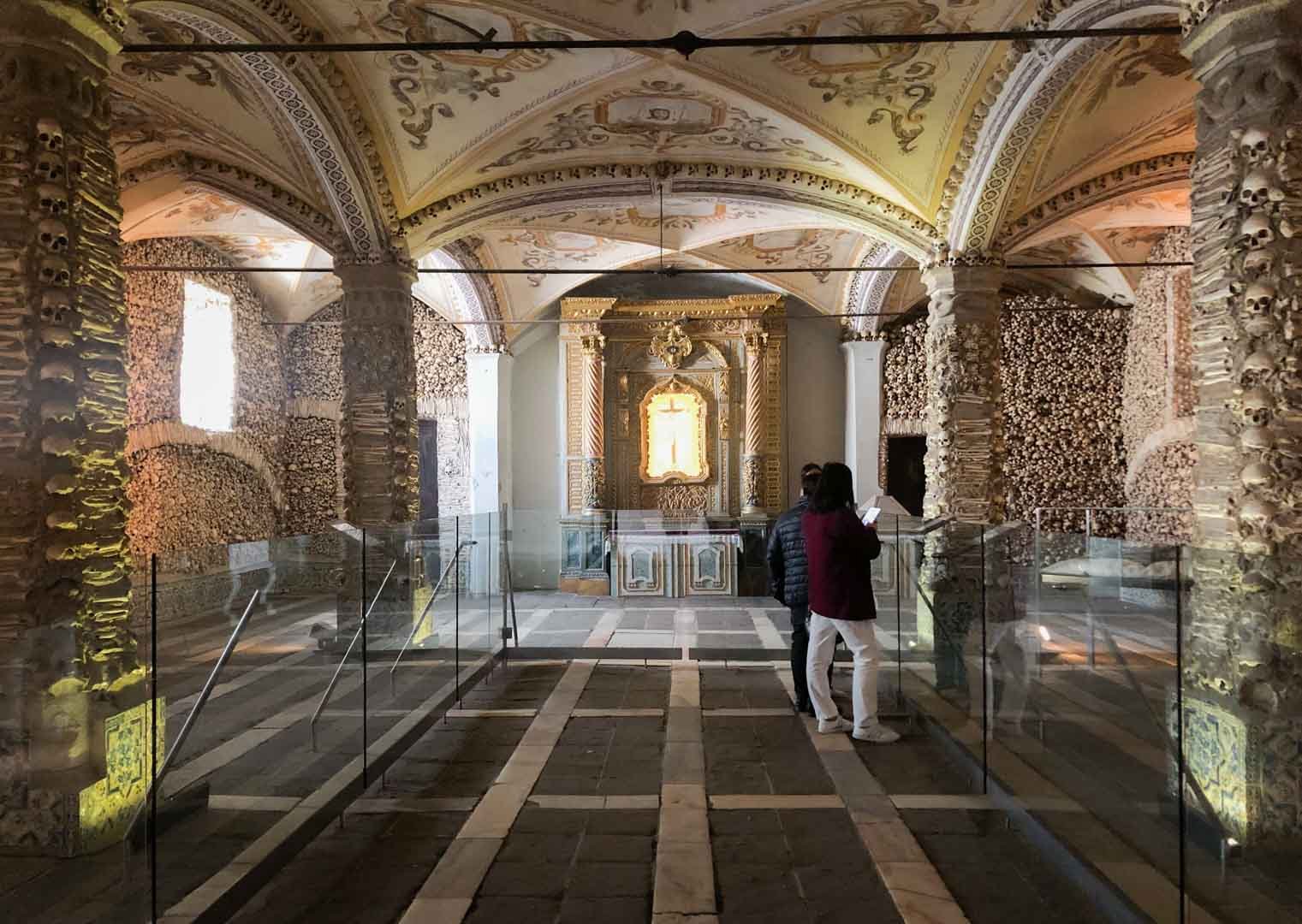
"We Bones await Yours" - Inside the Bone Church and Ossuary of Évora
When I arrived at the chapel, which is part of Church of St. Francis (Igreja de São Francisco), I could eerily hear the sounds of children playing. At first, I thought it was a strange part of the ambience, but then I realised there were actually real-life children playing outside the building; it was a pretty interesting contrast to the hundreds of years old human bones preserved on the other side of the wall.
On entering the Chapel, you are greeted with the inscription above the door: “Nós ossos que aqui estamos, pelos vossos esperamos,” which translates from Portuguese to “We bones that are here, for yours await”. An awakening thought prompting thoughts from the Latin phrase Memento Mori, which translates to ‘remember you must die’ – a reminder that we are mere mortals and everyone inevitably follows the same path in the end.
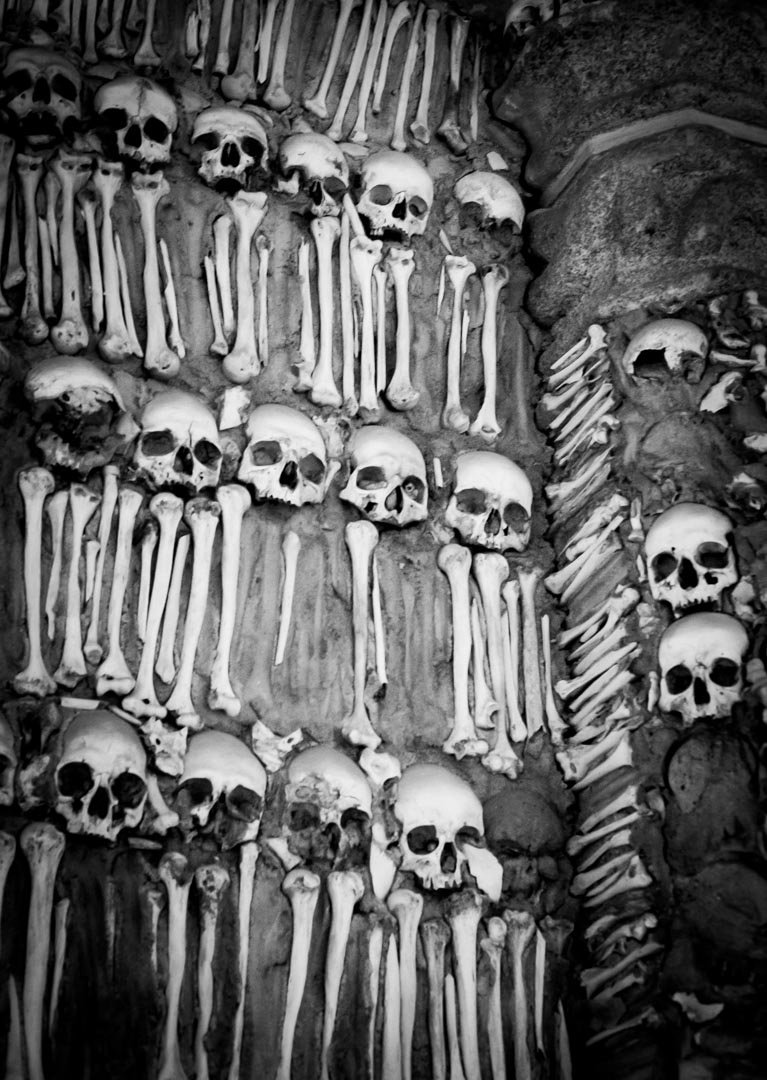
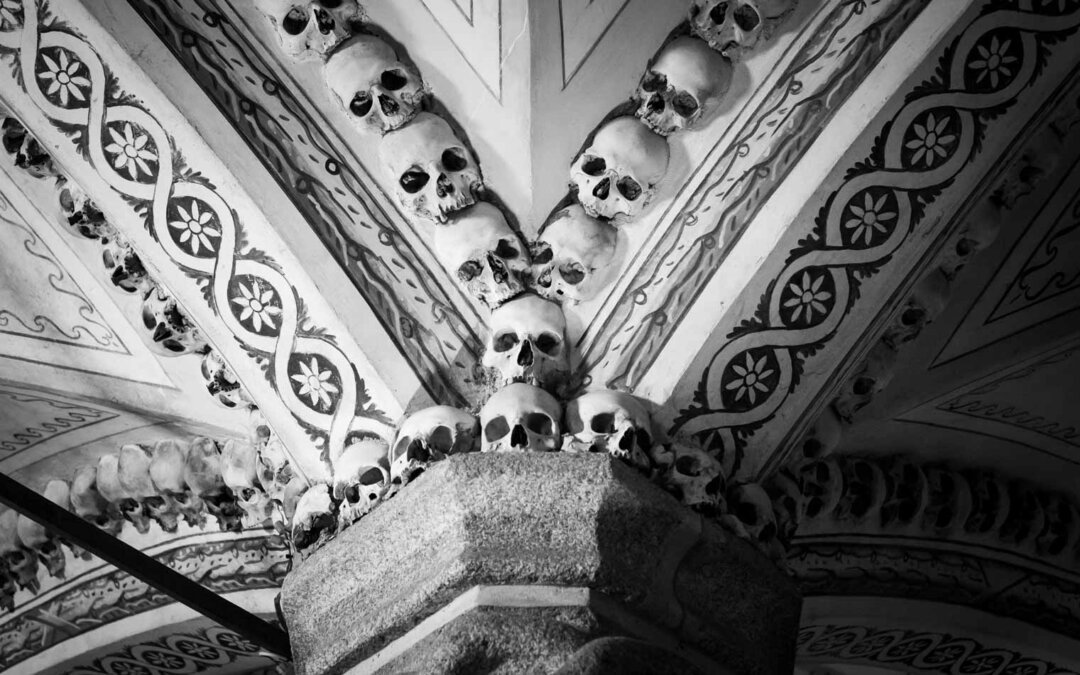
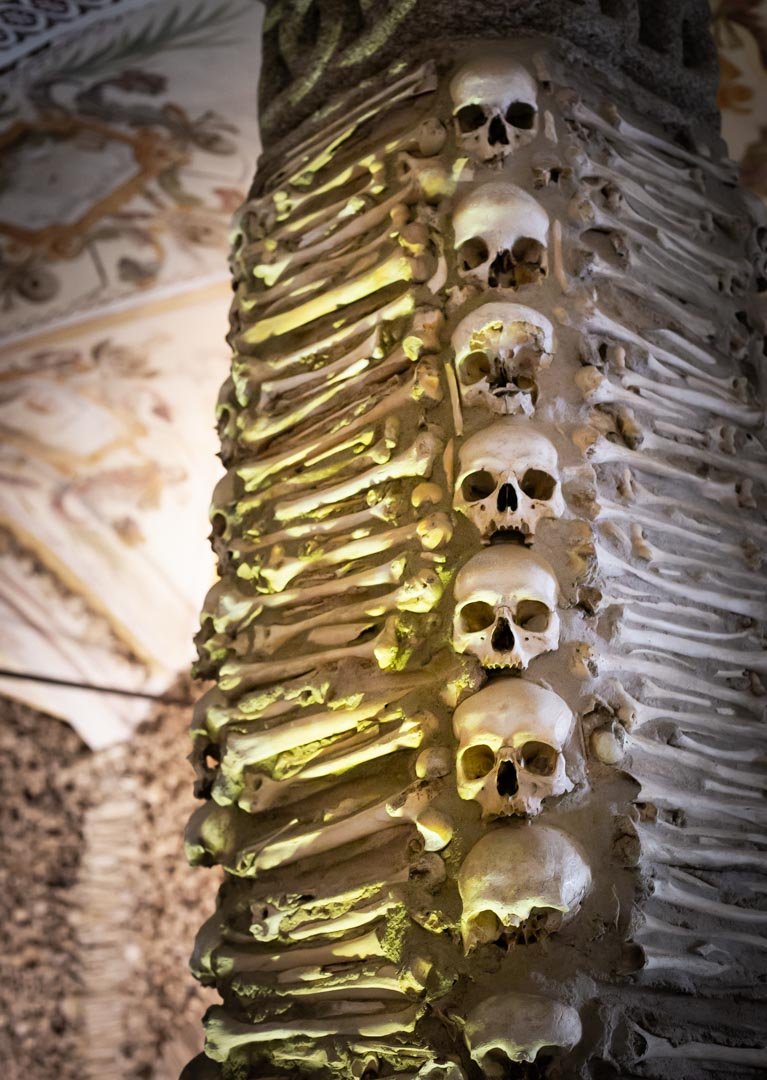
When I walked into the chapel, an instant calm came over me. Decorating the walls, columns, and parts of the ceiling were the bones of those hundreds of years old, stacked upon each other. The ceiling arches are ornately decorated with gold paint. The room is quite dark, with natural light shining through the small windows and dim artificial light illuminating the columns and walls.
This remarkable ossuary is one of the most recognisable examples of a bone church in Europe.
I spent time in silence, soaking up the atmosphere and connecting to the feelings in the room. I pondered the lives that once were and how they died. It was an interesting experience, almost like they were naked and on display with no choice but to remain there for as long as the Chapel stands.
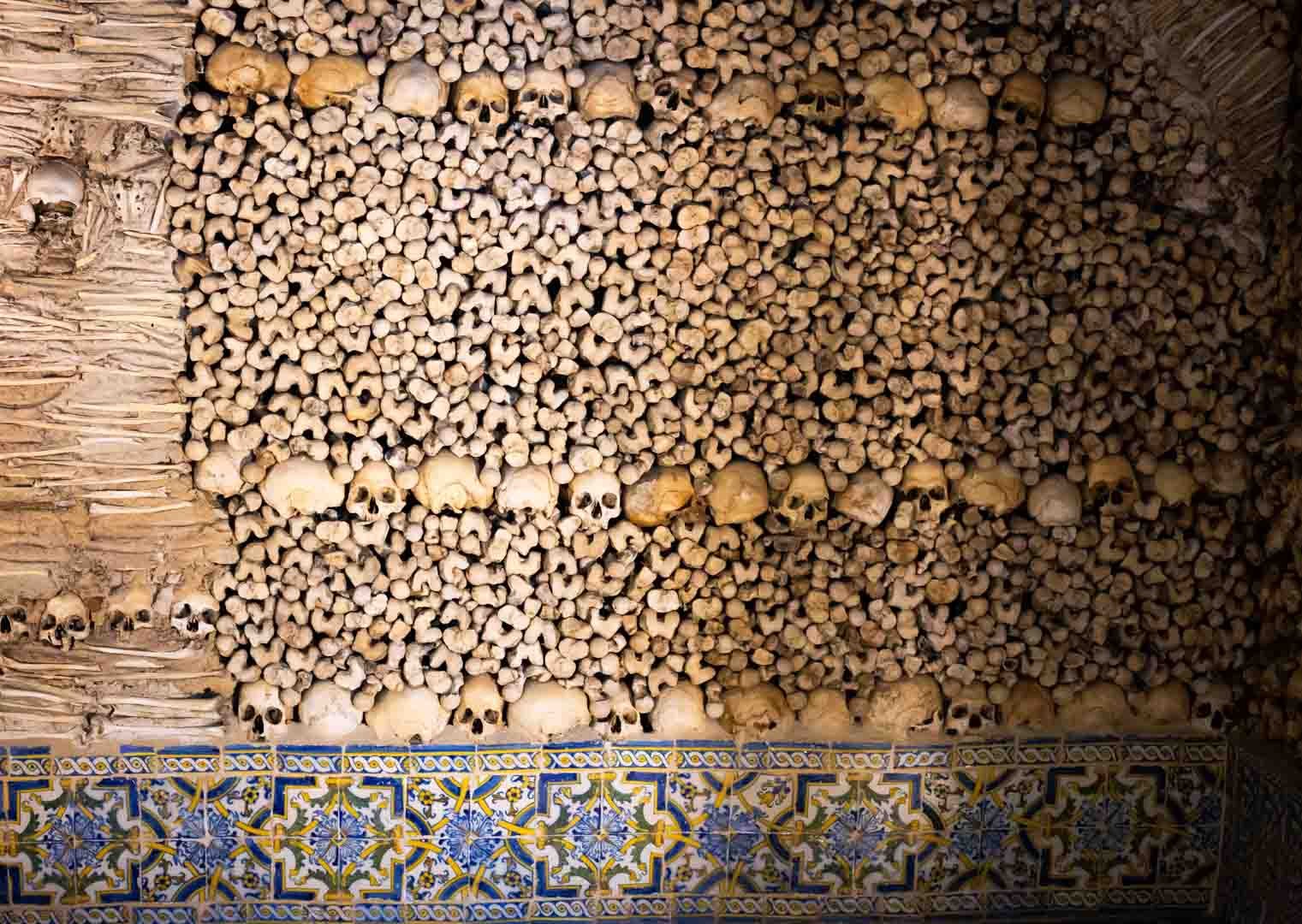
To be honest, I did have mixed feelings about the experience. In one respect, the concept absolutely did its job in awakening thoughts of life’s transience. In the other, I was wondering if these bones wanted to be there on display and whether they would be happy about that. Looking at the skulls, it looks almost like they are lost souls forever laid to rest in this place of the living’s reflection. There isn’t a word for the way it made me feel in the English language, but I’m sure there would be one in another language.
In glass cases in one corner of the room, there are also two mummified corpses on display: a woman and an infant. The original story was that this was an unfaithful man and his illegitimate infant son, although that was proven inaccurate by forensic research concluding that they were, in fact, both females.
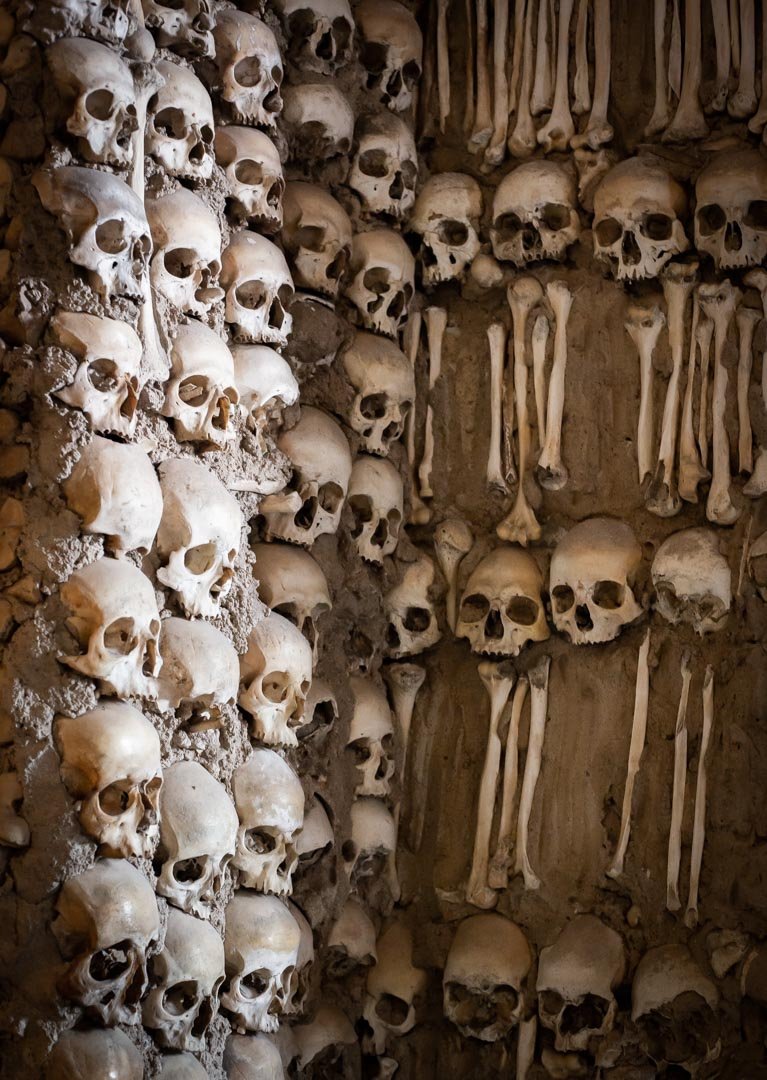
A Moment of Reflection at One of Portugal's Most Unique Heritage Sites
A poem by Father Antonio de Ascencao Teles is displayed inside the chapel, prompting visitors to take a moment and reflect on where they are, triggering their mind to stop and think, and take their time. You are exactly where you are supposed to be in that moment of time, so bring yourself into the present moment, go inwards, and reflect on the ability to breathe, and on life itself.
[Poem and translation remain unchanged]
History of the Chapel of Bones Évora
So, what exactly is the Capela dos Ossos, and why was it created?
The exact details of the Chapel’s origin are a little wavy, but research suggests it was built around the 16th–19th centuries by Franciscan friars, during the Counter-Reformation, or Catholic Revival, as it is also known.
The monastery graveyards in and around Évora were becoming much too crowded and were occupying too much land, so much like the concept of the Catacombs, the bodies of over 5,000 dead were exhumed and, rather than being placed underground, were then integrated into the walls and pillars of the Chapel in a meticulous way, using cement to keep them in place.
Today, the Chapel of Bones Évora is considered one of Portugal’s most significant historic sites, attracting visitors interested in religious history, architecture and mortality.
The bones were originally displayed for religious purposes to enlighten the thought that material belongings are not necessary and to encourage visitors to reassess their core values and faith in God. The Chapel served as a reminder of spirituality, the transcendence of life, and to empower the idea of the Christian conscience in a world where social values were declining. The Counter-Reformation ideology also reflects that the dead would be closer to God by being placed to rest here.
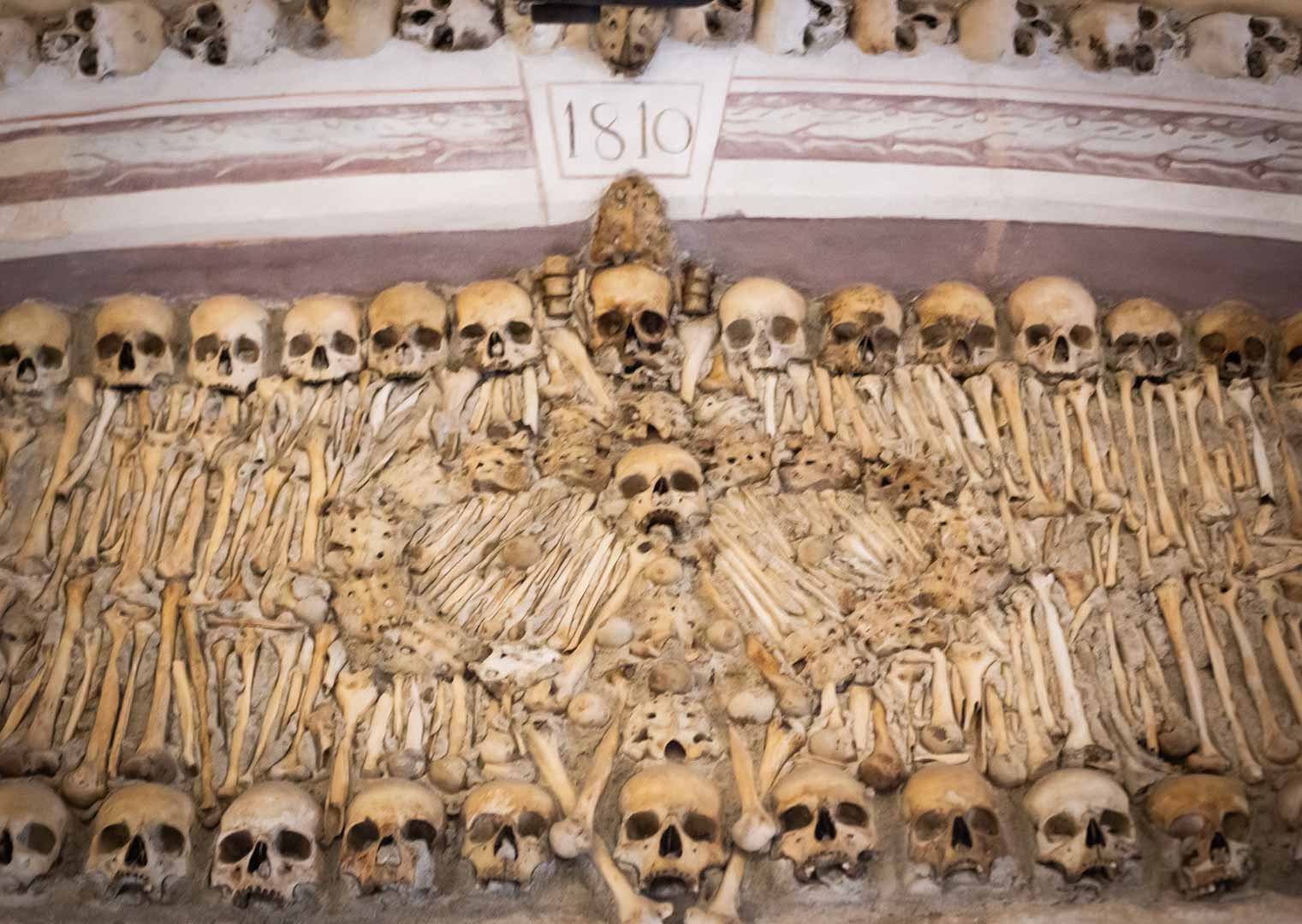
As one of the most distinctive historical buildings in Portugal, the chapel continues to draw travellers from around the world.
I would imagine it would have taken a very long time to sort through the bones, clean them up, and then place them carefully in their dedicated areas. When I was in the Chapel, I could see with my mind’s eye (or imagination) the monks from the past placing the bones delicately, using candlelight to create this haunting display of the dead.
The mirror between life and death, and the stark contrast in the time span of our short lives compared with the bones that can last for hundreds of years, really does reflect certain clarity on what’s important and what isn’t. With all the stresses that come with modern day life, we really do lose sight of what is actually important.
Dark Tourism Portugal and Macabre Tourist Attractions
For those interested in dark tourism Portugal, the chapel offers a thought-provoking experience rather than a frightening one. While it is often listed among Europe’s most unusual macabre tourist attractions, the atmosphere inside is surprisingly peaceful and contemplative.
Unlike many attractions that rely on shock value, the Bone Chapel encourages visitors to reflect on mortality, spirituality and the fleeting nature of life. It stands apart from many other attractions in Portugal because of the powerful message woven into its very walls.

My Conclusion: Why the Chapel of Bones is a Historical Place Worth Visiting
For those of you who think that this is quite dark and morbid and feel compelled to shy away from the idea, think of it more as an invitation to see yourself and your life from an outside perspective. If you are in tune with your spirituality in any form, then I urge you to see the bigger picture.
For any person who has ever breathed on this planet, there are only three things we have in common with each other. That is, we are born, we breathe, and we die. It’s the cycle of life, and unless you have immortal powers, we cannot exist on this planet in our physical form outside of this life that we have right now.
In terms of self-reflection and self-realisation, this is what helped me a lot: Imagine all those moments you felt stressed or uneasy or angry, and these emotions or thoughts took over your mind for a while, and you felt bogged down or trapped by these thoughts or feelings. Let them go. Because our individual time here is so limited that there is really no room for any of that.
Have gratitude, think about the things that you are grateful for. The people you have in your life, your experiences, your ability to breathe. That you have life at all. These are all things to be grateful for when faced so closely with the eternity of death.
This isn’t just a place to go see some bones and snap a selfie with some skeletons (although there were a lot of tourist groups doing this exact thing!); the whole concept invites you to dig deep into your life and really think about the miracle of life and what we can and have achieved.
For anyone seeking a meaningful visit to a historical place, the Chapel of Bones offers an experience unlike any other. It remains one of the most memorable places to visit in Portugal and one of its most intriguing heritage sites.
Think about your own existence and how extraordinary you are. The body you live in, its ability to self-heal, your mind, your soul. Be in the present moment, and think about all of it.
So go enjoy your life, don’t sweat the small stuff! If something is bothering you or causing you distress in your life, face it head-on and make room for the light, because there really is no point in being held down by invisible chains when you have this beautiful life right here, right now to experience.
As the bones tell us, we will be dead for much longer than we are alive.