

Exploring the Underground Caves
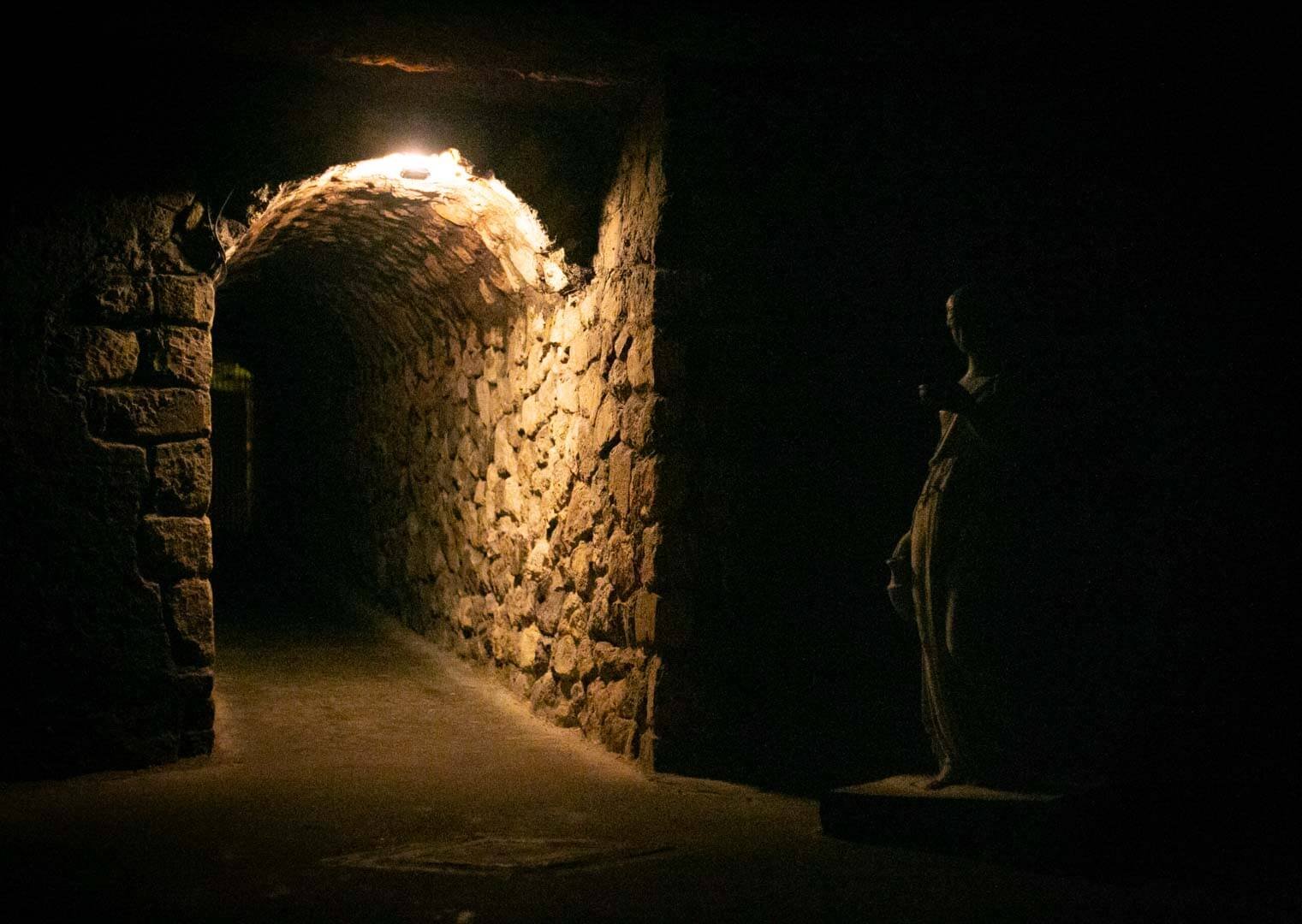
Beneath the streets of Budapest lies a maze of underground tunnels filled with dark history, Dracula legends, sensory deprivation chambers, and complete darkness. The Labyrinth beneath Buda Castle — also known as Labyrintus — is one of the strangest Budapest attractions, blending natural caves, medieval history, theatrical exhibitions, and genuinely unsettling underground experiences.
I went down there hoping for atmosphere, history, and a few chills.
I definitely got them.
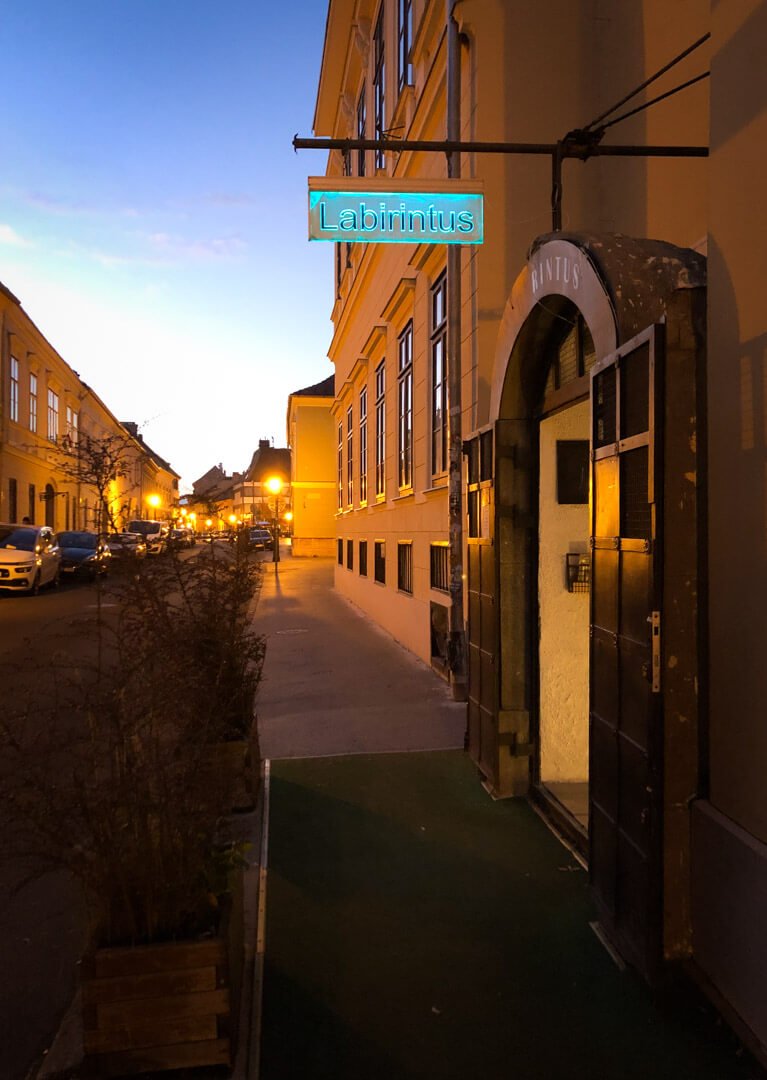
Entering the Labyrinth down some stairs and into the entrance felt very shady from the beginning.
Dark History, and the Eerie Atmosphere of Budapest’s Labyrintus
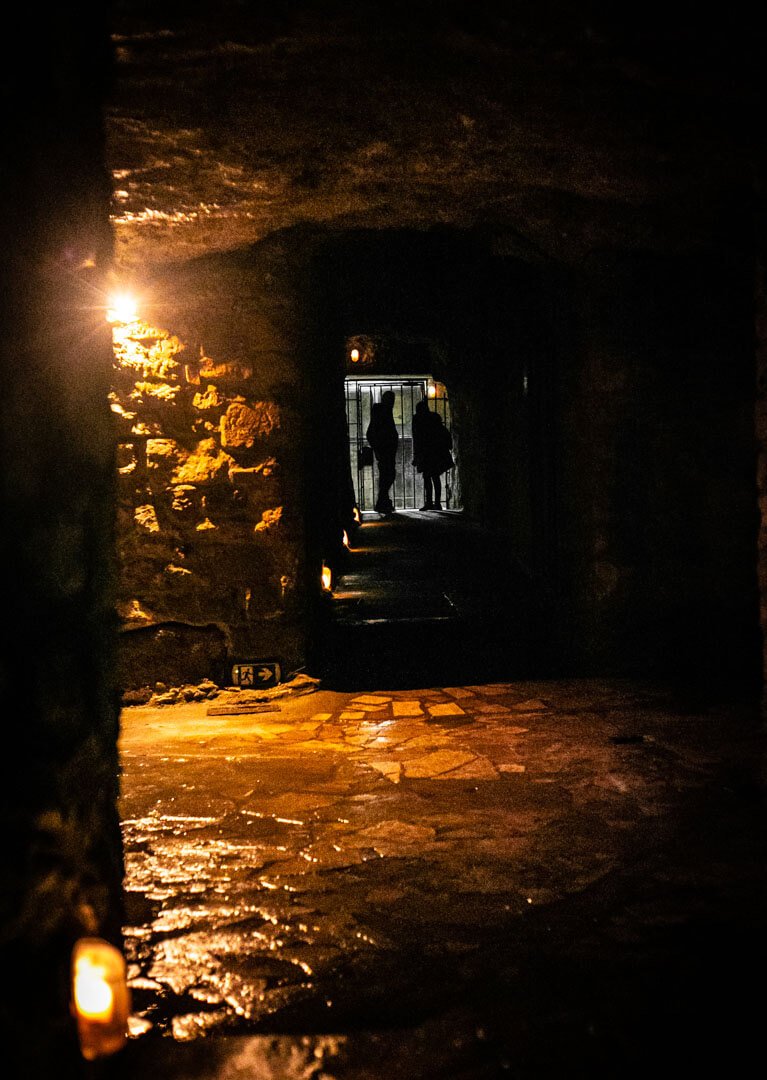
There was one ticket man on the desk, seemingly unbothered by his guests entering. Once through the turnstiles, you follow arrows into the dark, dank corridors, where you are greeted with Verdi’s opera music echoing loudly through the tunnels.
Honestly, I thought this was very annoying and would rather have explored the cave system in quiet so I could actually hear the thoughts in my head and take in the feelings of the cave itself.
But no — it repeatedly played on a loop that you cannot escape until you reach the other side of the cave.
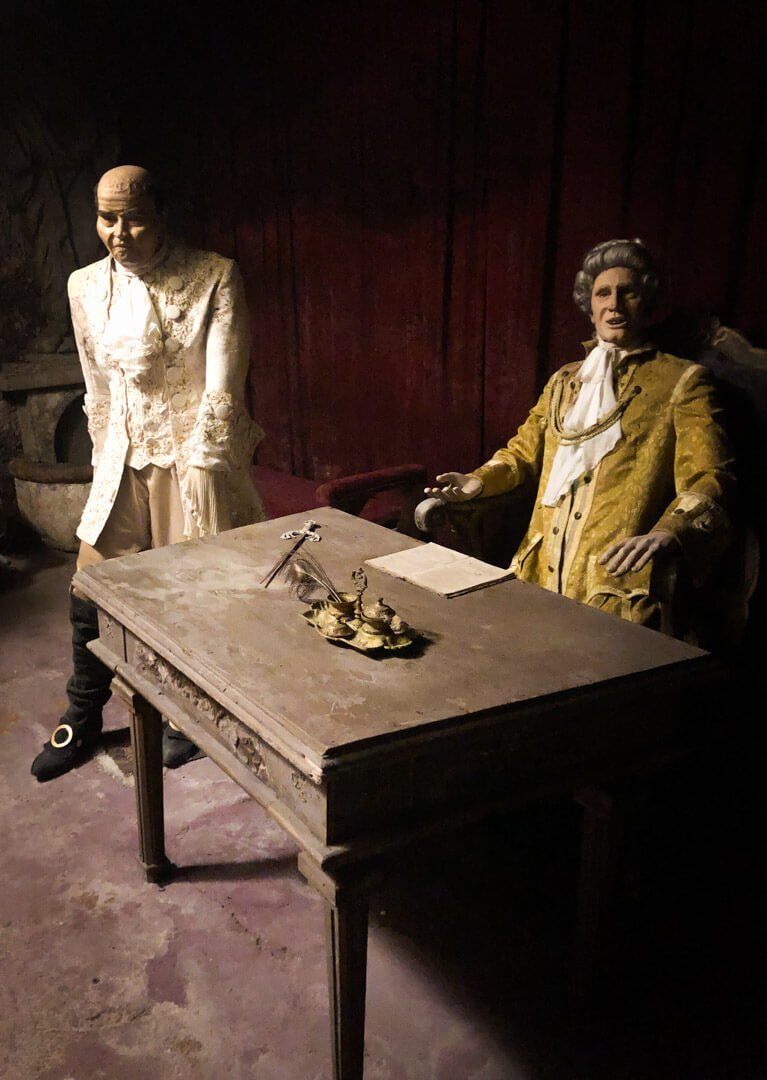
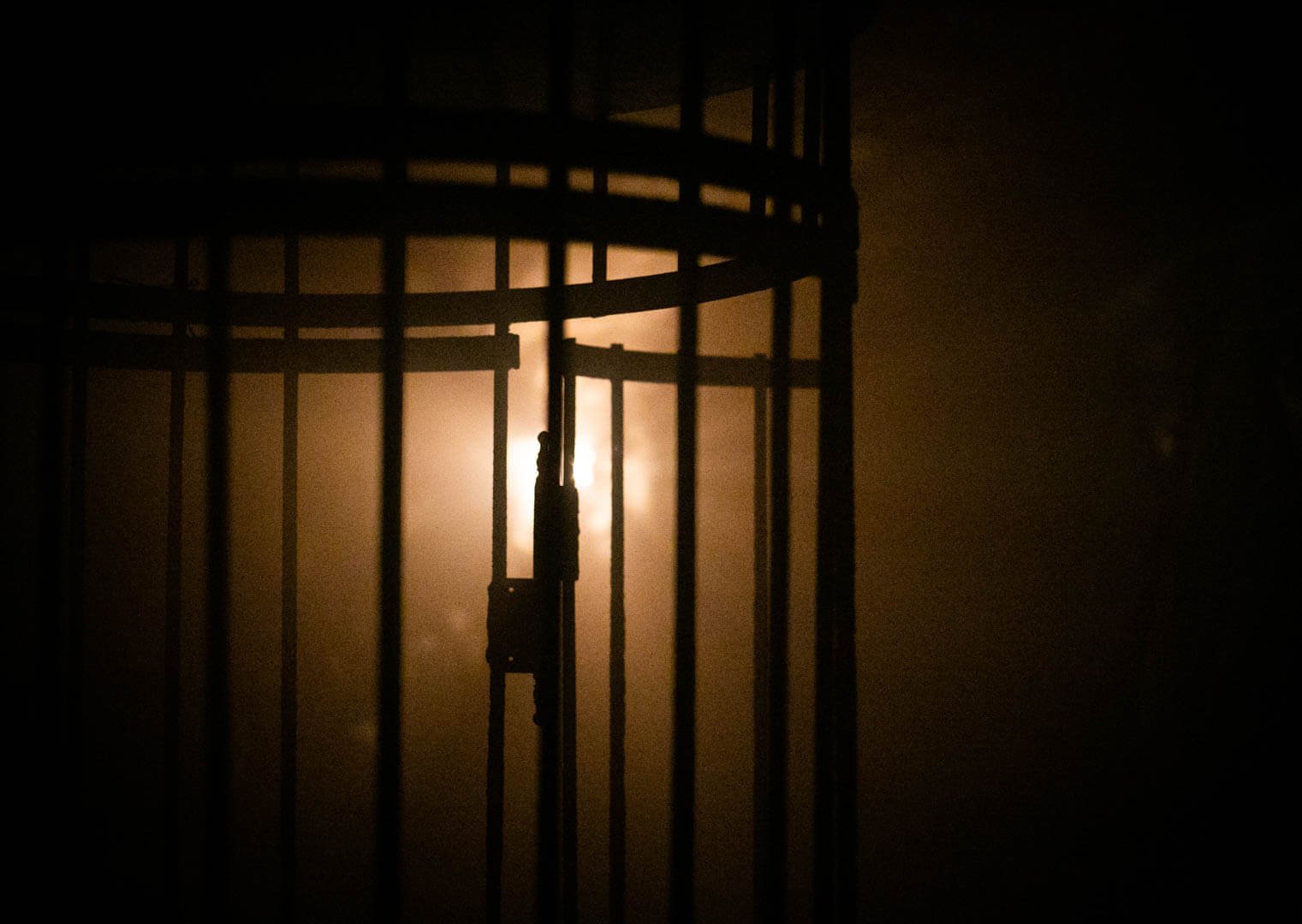
Inside cages were mannequins in old 18th-century dress, frozen in time beneath the castle, displaying costumes from various operas reflecting a period when Buda Castle was at the forefront of musical culture.
The whole place immediately felt strange.
Feeling Overstimulated Underground
The constant noise throughout the cave system was very distracting for me.
When I visit a place, I like to tune into the environment and really experience it, but this was nearly impossible with all the sound, including visitors walking loudly and echoing voices.
I get overstimulated easily, so the start of this visit was especially annoying and disorientating.
Still, I wanted to see the cave system beneath Budapest, so I did my best to find areas without other guests and enjoy it as best as I could, as I understand some things are outside my control.
Eventually, deeper within the tunnels, things became much more atmospheric.
Dracula’s Chamber and the Maze of Darkness
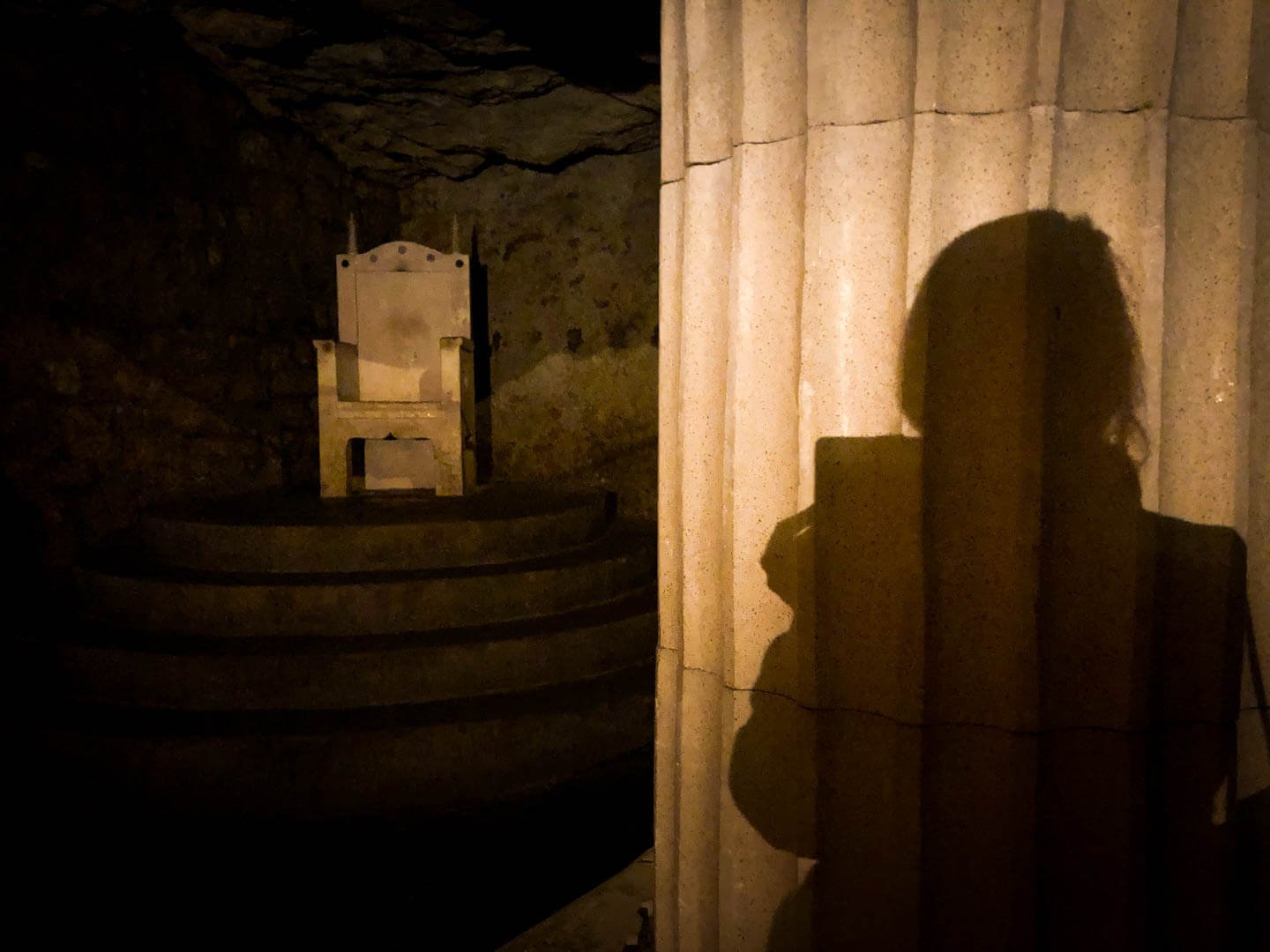
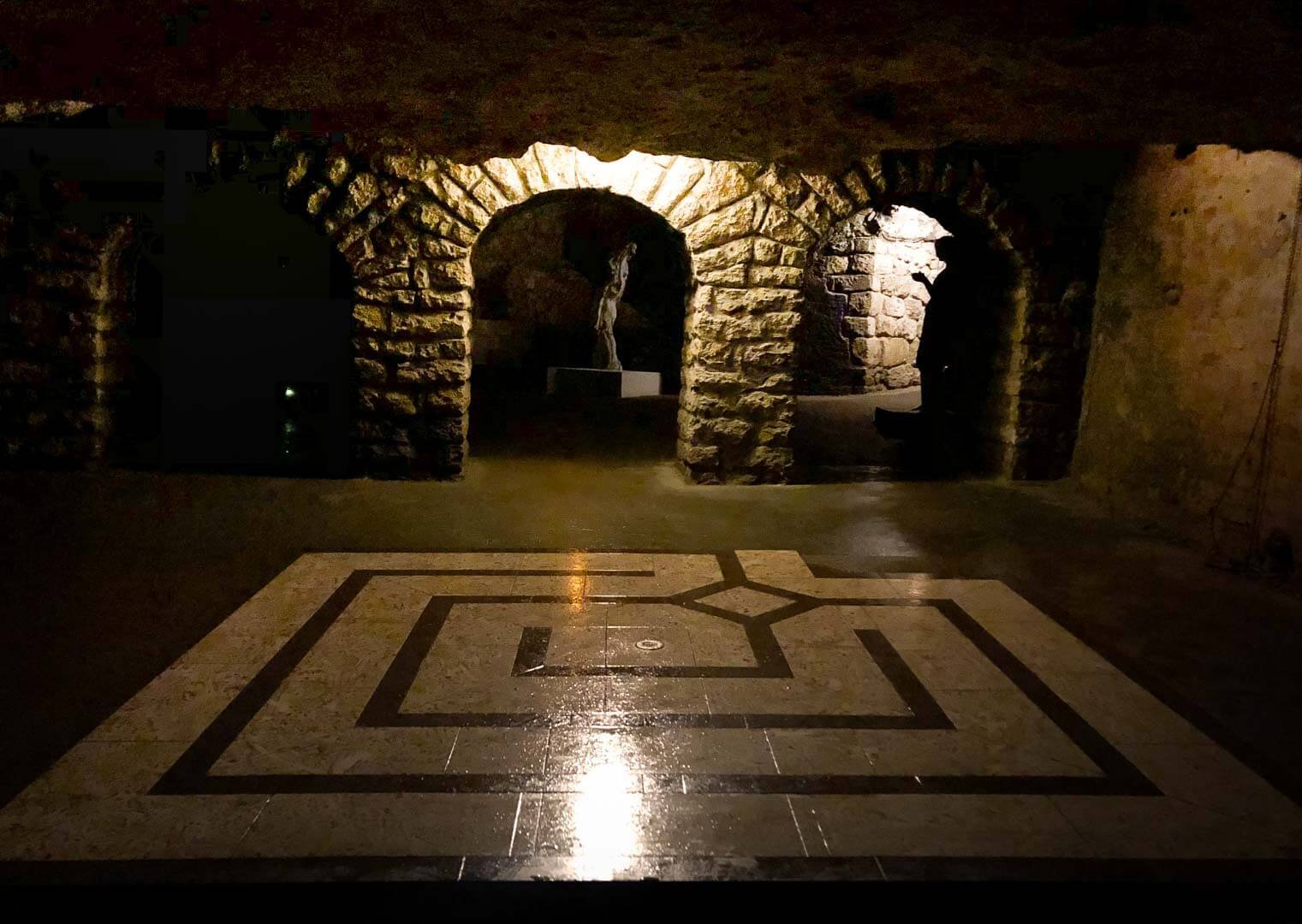
As you make your way through the cave system, you pass exhibitions such as the Hall of Statues of Hungarian Kings and the Masked Ball opera exhibition.
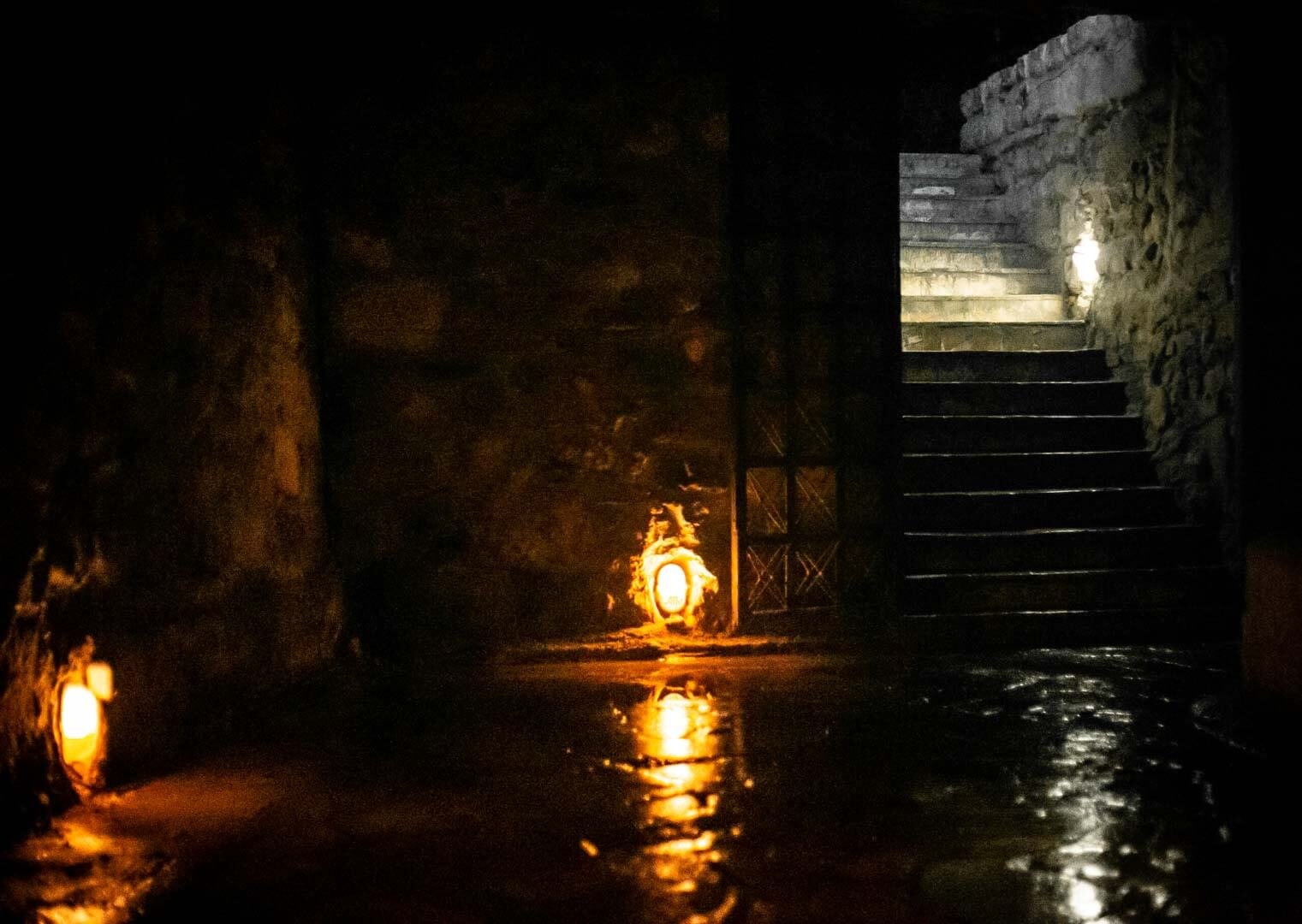
But eventually, you reach Dracula’s Chamber and the Maze of Darkness — easily my favourite part of the Labyrintus.
This section finally felt immersive in the way I had hoped for.
Statues lit dramatically against the darkness, mist drifting through the tunnels, dripping water echoing around the caves… suddenly the atmosphere became genuinely eerie.
Compared to the louder theatrical sections earlier on, this area actually allowed the cave itself to breathe.
Vlad Țepeș, Dracula, and the Legends Beneath Budapest
One of the most interesting parts of the Labyrinth’s history is its connection to Vlad Țepeș — also known as Vlad the Impaler — the historical ruler who inspired Bram Stoker’s Dracula.
Some stories claim Vlad Țepeș died down in these tunnels beneath Buda Castle, but that is historically inaccurate.
He was actually released from imprisonment and later fought alongside King Matthias before eventually being killed after political betrayal and conflict.
Still, standing alone in those tunnels surrounded by fog and darkness, it becomes very easy to understand how the Dracula legends grew around this place.
Sensory Deprivation in Total Darkness
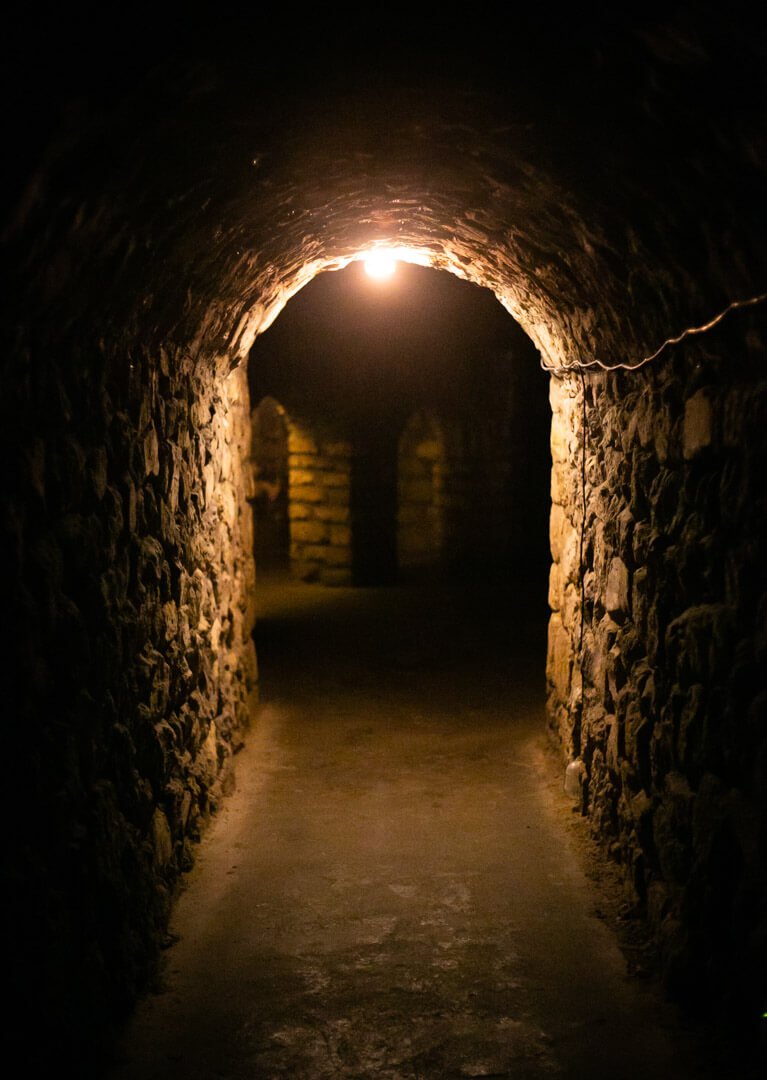
There is a part of the maze that functions as a sensory deprivation section completely devoid of light.
No sound. No visibility. No more Verdi. Nothing.
There is a rope along the side of the cave for visitors to hold onto while walking through the darkness.
But I wanted to experience complete deprivation, so instead I held my arms out in front of me and walked slowly through the tunnel, occasionally bumping into the cave walls.
It was genuinely unsettling.
At the end of the tunnel, I came to a dim blue light. Thinking it was the exit, I was slightly horrified to discover more strange mannequins trapped behind bars.
For some reason, this startled me more than the darkness itself.
I briefly turned my torch on just to check where I was going before switching it off again.
Not because I was scared, obviously.
Alone in Dracula’s Cave
Further exploration led me deeper into Dracula’s cave itself.
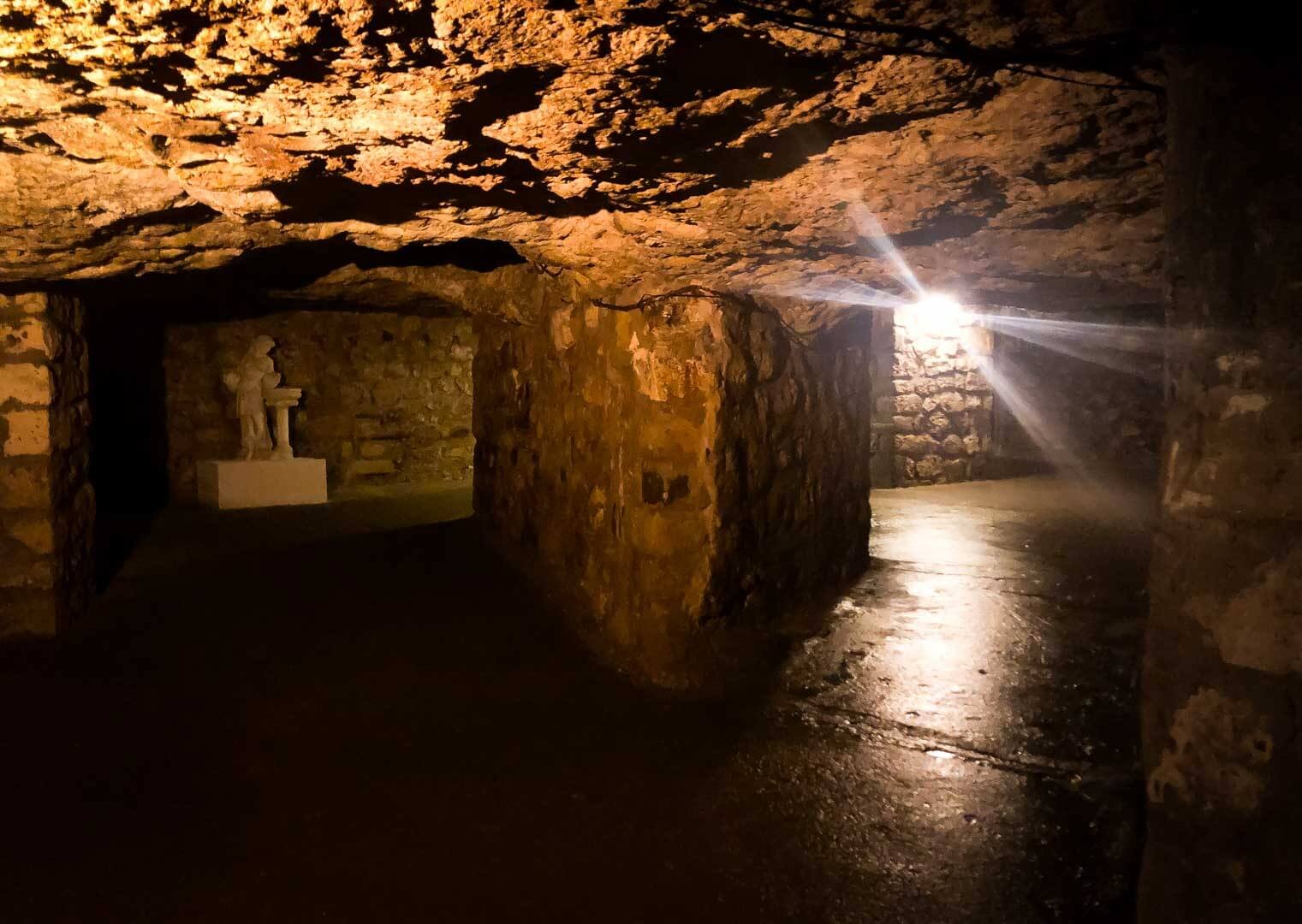
By this point, the loud Verdi music had mostly disappeared, replaced instead by dripping water, echoing footsteps, distant sounds, and dark corners vanishing endlessly into the tunnels.
Artificial fog rolled through the corridors while displays of severed heads appeared from the shadows.
And then I realised something.
I was pretty sure there was nobody else left down there.
Suddenly, the experience became much more unsettling.
I didn’t actually know what time the caves closed, and honestly, with only the one man upstairs, I wasn’t entirely convinced they properly checked the tunnels before locking up.
When I finally emerged back upstairs, even the ticket attendant looked surprised to see someone coming out.
That did not exactly reassure me.
The Ghost Stories Beneath Buda Castle
Like many underground places connected to imprisonment and suffering, the Labyrinth has accumulated ghost stories over the centuries.
There are stories of forbidden lovers secretly meeting in the tunnels, along with reports from mushroom growers who claimed to see apparitions roaming beneath Castle Hill.
Interestingly, there really are sections of the cave where the smell of mushrooms becomes incredibly strong.
Whether they still grow them down there or not, I honestly do not know.
But the atmosphere certainly feels haunted enough to inspire the stories.
The Chills Beneath Budapest
One thing I practise often while travelling is consciously grounding myself in the present moment.
I close my eyes, focus on my senses, and mentally acknowledge exactly where I am.
Doing this alone inside a dark underground torture chamber beneath Budapest is surprisingly intense.
For a brief moment, your brain becomes hyperaware of how vulnerable you actually are underground.
Thankfully, I was not actually in danger.
At least, not that I know of.
Still, by the time I emerged back into daylight above Buda Castle, my hair was genuinely standing on end for quite a while afterwards.
And honestly?
That was exactly what I had gone down there for.
The chills.
Final Thoughts: Is the Buda Castle Labyrinth Worth Visiting?
Absolutely — especially if you enjoy dark tourism, paranormal travel, underground places, gothic history, or unusual Budapest attractions.
The loud opera music and theatrical mannequins occasionally distract from what could otherwise feel like a genuinely haunting historical site.
But once you reach the deeper tunnels beneath Budapest, the atmosphere becomes genuinely eerie in the best possible way.
And despite the weirdness, sensory overload, and unsettling displays, I left with exactly what I had hoped for when entering the caves beneath Buda Castle:
Unease.
Curious for More...??
If you have enjoyed this blog post and are interested in learning more about Vlad the Impaler, I will be writing an in depth research paper which I will upload to this blog!
If you have any similar experience, or would like to share your own experience of the Labyrinth under Buda Castle, then drop it in the comments and start a conversation!
If you are intrigued about this place and want to know how to get there, just click on this link and it will take you there!
Subscribe to my newsletter, or email me!
Louise X